

$455.00
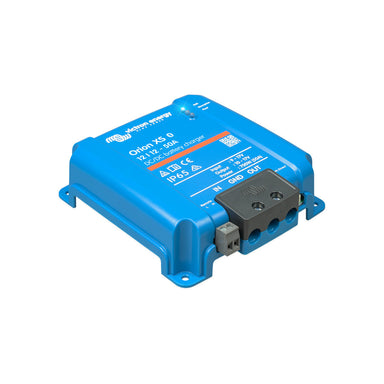
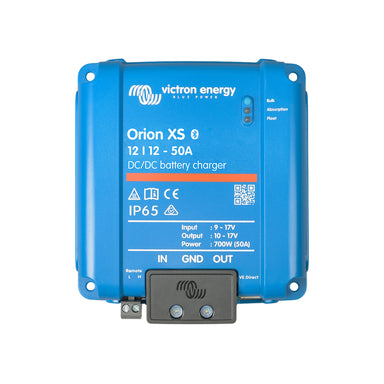
The Victron Orion XS 12/12-50A DC-DC Battery Charger represents a groundbreaking leap in adaptive DC-DC charging technology. Specifically crafted ...
View full details
$455.00
While both Victron DC-DC chargers and DC-DC converters serve a similar purpose of converting DC power, there are some key differences between the two.
A DC-DC charger is specifically designed to convert DC power from a source such as a vehicle's alternator or battery into a regulated and controlled charge for another battery system, such as in a "Dual Battery" setup . It ensures efficient charging of batteries by adjusting the voltage and current based on the battery type and condition. DC-DC chargers also often include additional features like battery temperature sensing and intelligent charging algorithms to optimise battery lifespan and performance.
On the other hand, whilst some models ARE suitable for charging duties, a DC-DC converter is more versatile and used for converting DC power to a different voltage level to cater to various devices or systems. It allows you to step up or step down the voltage, depending on the requirements of your load.
DC-DC converters are commonly used in applications such as powering appliances or equipment in vehicles, boats or off-grid installations. They provide a consistent and stable power supply, ensuring proper functioning of the connected devices.
In summary, whilst a Victron DC-DC charger is specifically designed for efficient battery charging, a DC-DC converter offers voltage transformation for powering devices or systems with different voltage requirements.
See our range of Victron DC-DC Converters HERE
Whether you're looking to power your marine applications or optimise your automotive systems, our range of Victron isolated and non-isolated DC to DC chargers provides the flexibility and performance you require. Choose Victron for advanced charging technology that keeps your batteries performing at their best.
1. The DC to DC charger can remain cheaper.
2. Solar can be charging into the battery system simultaneously with the on-board vehicle charging.
3. You can purchase the correct solar regulator to match your solar panels, which will provide the best efficiency for solar charging.
An isolated DC-DC charger has one negative connection for each battery and there is no internal connection between the negatives. They are required for systems that need to be isolated, which could be for a number of reasons including limiting corrosion (typically marine applications) and preventing noise on one battery system from affecting the other battery system.
For systems that do not require isolation, either unit can be used. However, the non-isolated unit is cheaper and requires one less wire to be installed. In automotive systems, the negative of both batteries is typically connected to the chassis of the vehicle. This is a non-isolated system; therefore, either unit will be suitable. Caravan, RV, and 4X4 customers tend to purchase non-isolated Victron DC to DC chargers, with the most popular being the 30A 12/12 DC to DC charger.
The term "Smart" refers to Victron's ability to connect your Bluetooth device (Smartphone) to their DC to DC Charger via the Victron Connect APP. This allows you to monitor and make setting changes easily. It's a unique feature of Victron energy systems. The VictronConnect App is available in App Store, Google Play, Mac app, and Download for Windows.
IP Ratings and Harsh Environments
The newer Victron Orion XS DC-DC chargers are IP65 rated, meaning they are dust-tight and protected against water jets, so they can be installed in harsher environments such as engine bays, marine compartments or other exposed locations.
Older Victron Orion-Tr Smart DC-DC chargers are rated IP43. This means they are protected against small solid objects and light water spray, but they are not waterproof. The IP43 rating only applies when the unit is installed with the terminals facing downward so water cannot run into the connections.
In practical terms, Orion-Tr Smart chargers must be installed in a protected location such as inside a caravan cabinet, battery compartment, or vehicle interior. They should not be installed in exposed areas such as engine bays, external chassis mounts, or anywhere they may be subject to rain, washdown, or road spray.
If an installation requires weather resistance, the Orion XS range is the appropriate Victron DC-DC charger because it is fully sealed to an IP65 standard.
Dielectric grease is recommended on connections in corrosive or installations subject to moisture.
The Victron Orion XS 12/12-50A DC-DC Battery Charger represents a groundbreaking leap in adaptive DC-DC charging technology. Specifically crafted ...
View full details

The Orion-Tr Smart 12v-12v 30A DC-DC adaptive 3-stage charger with built-in Bluetooth. For use in dual battery systems in vehicles or on boats wher...
View full details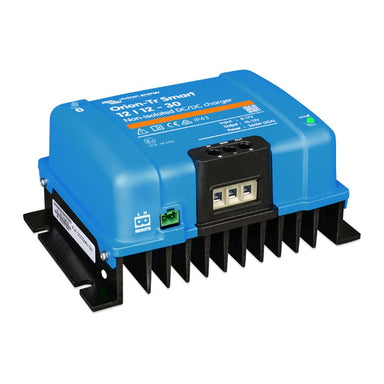
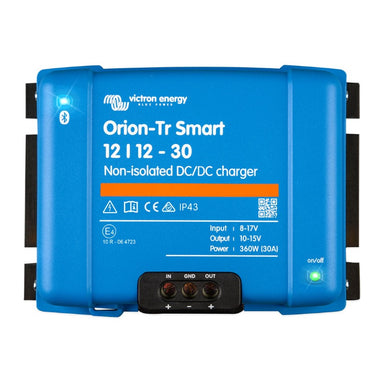
The Orion-Tr Smart 12v to 12v 30A, 360w DC-DC adaptive 3-stage charger with built-in Bluetooth. For use in dual battery systems in vehicles or on b...
View full details

The Orion-Tr Smart 24v to 24v 17A, 400w DC-DC adaptive 3-stage charger with built-in Bluetooth. For use in dual battery systems in vehicles or on b...
View full details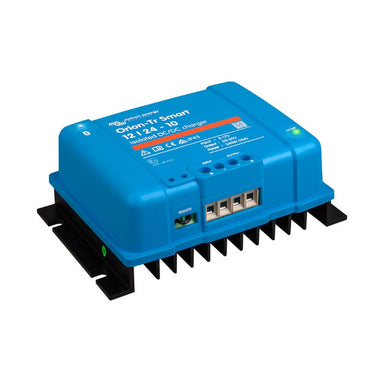
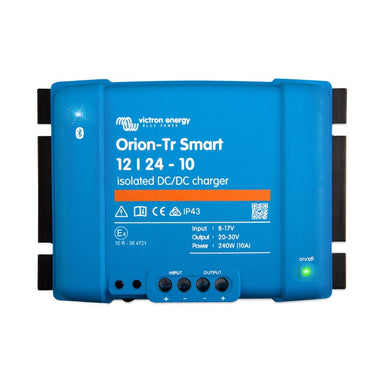
The Orion-Tr Smart 12v to 24v 10A 240w DC-DC adaptive 3-stage charger with built-in Bluetooth. For use in dual battery systems in vehicles or on b...
View full details

The Victron Orion XS 1400 DC-DC Charger - ORI242417040 is a compact and high-efficiency charging solution designed for dual-battery systems in vehi...
View full details

Victron Orion-Tr Smart 24v to 24v 17A, Non-Isolated 400w DC-DC adaptive 3-stage charger with built-in Bluetooth. For use in dual battery systems in...
View full details

Victron Orion-Tr Smart 24v to 12v 30A, Non-Isolated 360w DC-DC adaptive 3-stage charger with built-in Bluetooth. For use in dual battery systems in...
View full details

Victron Orion-Tr Smart 12v to 24v 15A, Non-Isolated 360w DC-DC adaptive 3-stage charger with built-in Bluetooth. For use in dual battery systems in...
View full details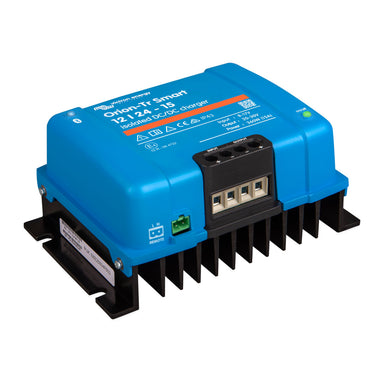
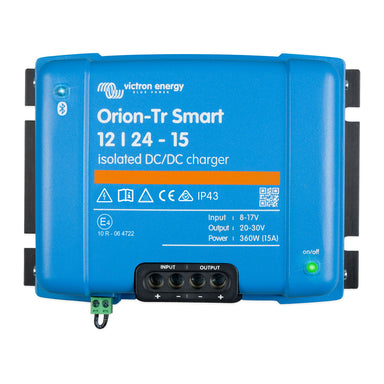
The Orion-Tr Smart 12v to 24v 15A, 360w DC-DC adaptive 3-stage charger with built-in Bluetooth. For use in dual battery systems in vehicles or on b...
View full details

The Orion-Tr Smart 12v to 12v 18A, 220w DC-DC adaptive 3-stage charger with built-in Bluetooth. For use in dual battery systems in vehicles or on b...
View full details

The Orion-Tr Smart 24v to 24v 12A, 280w DC-DC adaptive 3-stage charger with built-in Bluetooth. For use in dual battery systems in vehicles or on b...
View full details

The Orion-Tr Smart 24v to 12v 30A, 360w DC-DC adaptive 3-stage charger with built-in Bluetooth. For use in dual battery systems in vehicles or on b...
View full details

The Orion-Tr Smart 24v to 12v 20A, 240w DC-DC adaptive 3-stage charger with built-in Bluetooth. For use in dual battery systems in vehicles or on b...
View full details